
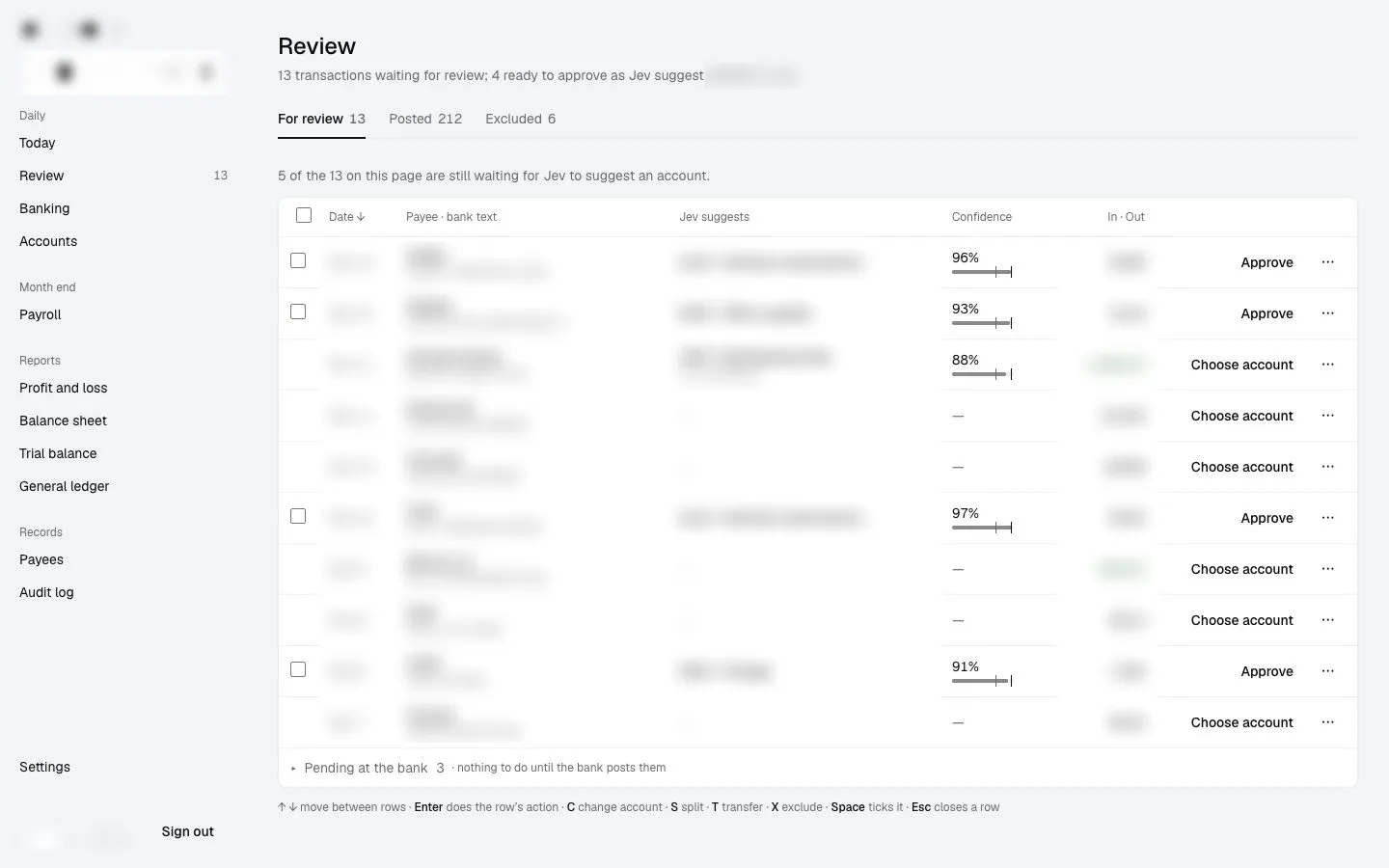
A prototype replacement for QuickBooks where AI suggests the account for each bank transaction and only the confident ones post on their own.
A ledger that asks first
- Client
- A small bookkeeping and tax practice
- Status
- Prototype. Not yet running the firm’s live books.
- Our role
- Product lead and architect. Built with Vince Fulcher.
The problem
A small bookkeeping and tax practice kept its clients’ books in QuickBooks Online, where nothing connected. Payroll and invoicing accounts were reconciled by hand, and audit support lived somewhere else.
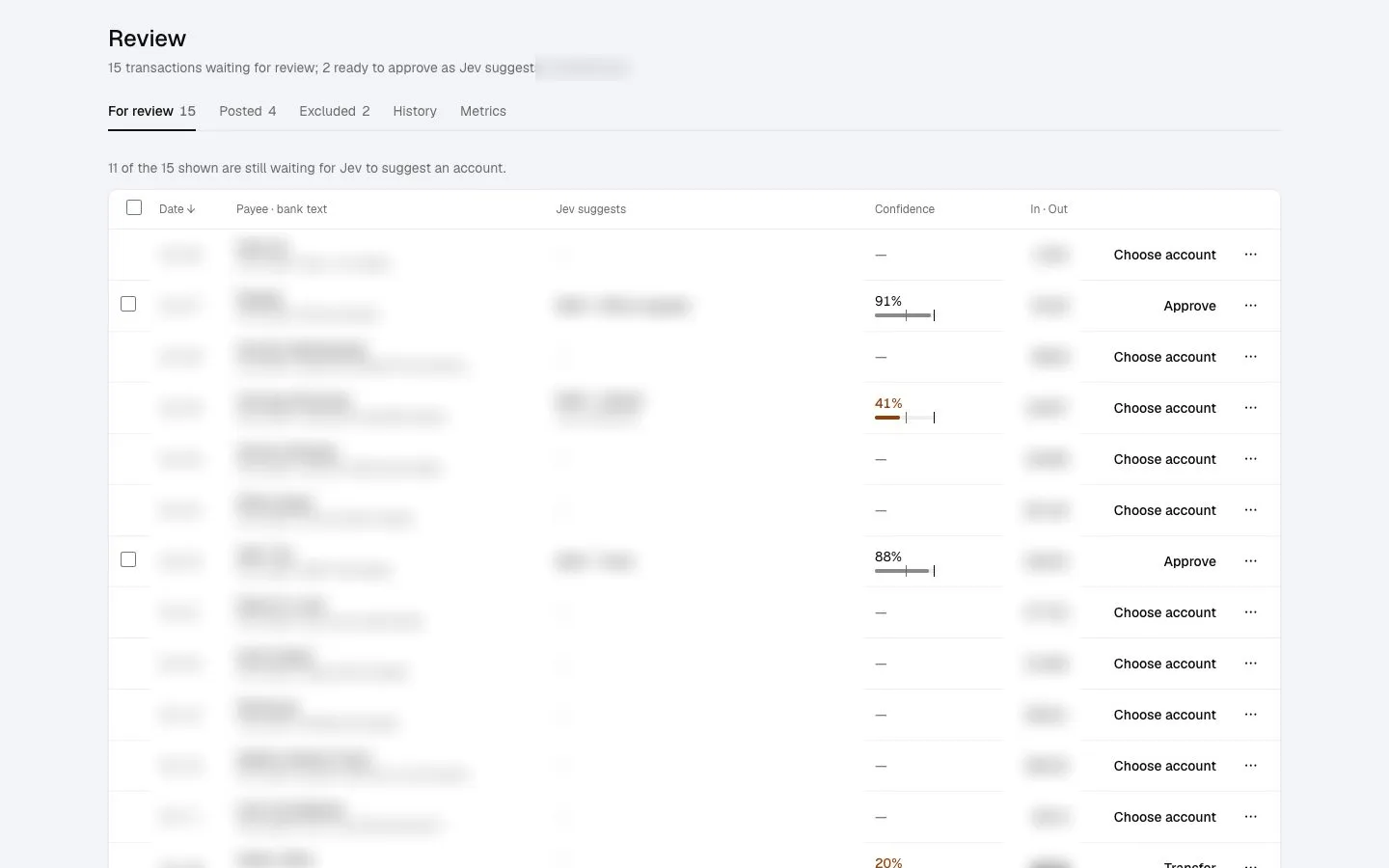
The review screen: a suggestion, a confidence score, an Approve button.
Built with
- Next.js
- TypeScript
- Supabase
- Stripe
- Claude API
What we built
We built a browser-based double-entry ledger to replace the core of QuickBooks. Bank transactions arrive through Stripe Financial Connections, and an AI model suggests the account for each one along with a confidence score.
The database itself refuses unbalanced or edited entries, and the QuickBooks importer stops on any data problem instead of guessing.
This is a prototype. It is not yet running the firm’s live books.
The result in one number
5,200
automated tests, about
Built in six weeks: 624 merged code changes and about 5,200 automated tests (small programs that check the software still works).
Where a person decides
Only transactions above the confidence bar the firm sets post on their own. Everything else waits on a review screen for a bookkeeper to approve.