
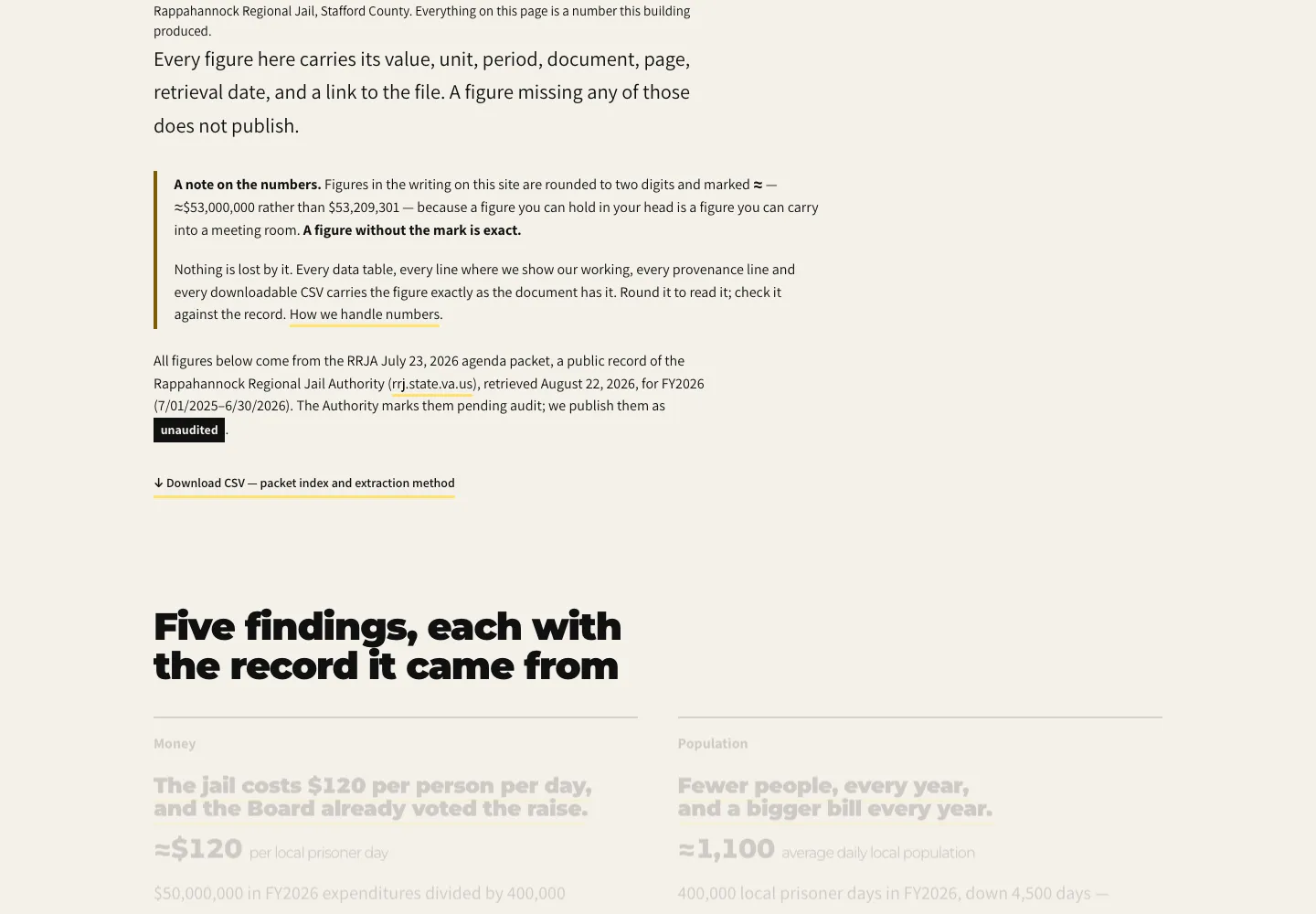
Years of jail records locked in public-records PDFs became a public website where every number links back to the page it came from.
Every figure, with its source
- Client
- Uncage RRJ, a nonprofit founded and facilitated by Will King, MF Growth’s founder. Not a paid engagement.
- Completed
- September 2026. Live and public.
- Our role
- Designed and built the whole site: PDF extraction, site generator, publishing checks
The problem
Uncage RRJ is a civic accountability nonprofit in Stafford, Virginia, focused on the Rappahannock Regional Jail. It had years of records obtained through public-records requests: a 1,855-page booking log, budget packets, grievance counts.
None of it was usable by the public as PDFs. And anything the organization published could be dismissed if a single number could not be traced.
What we built
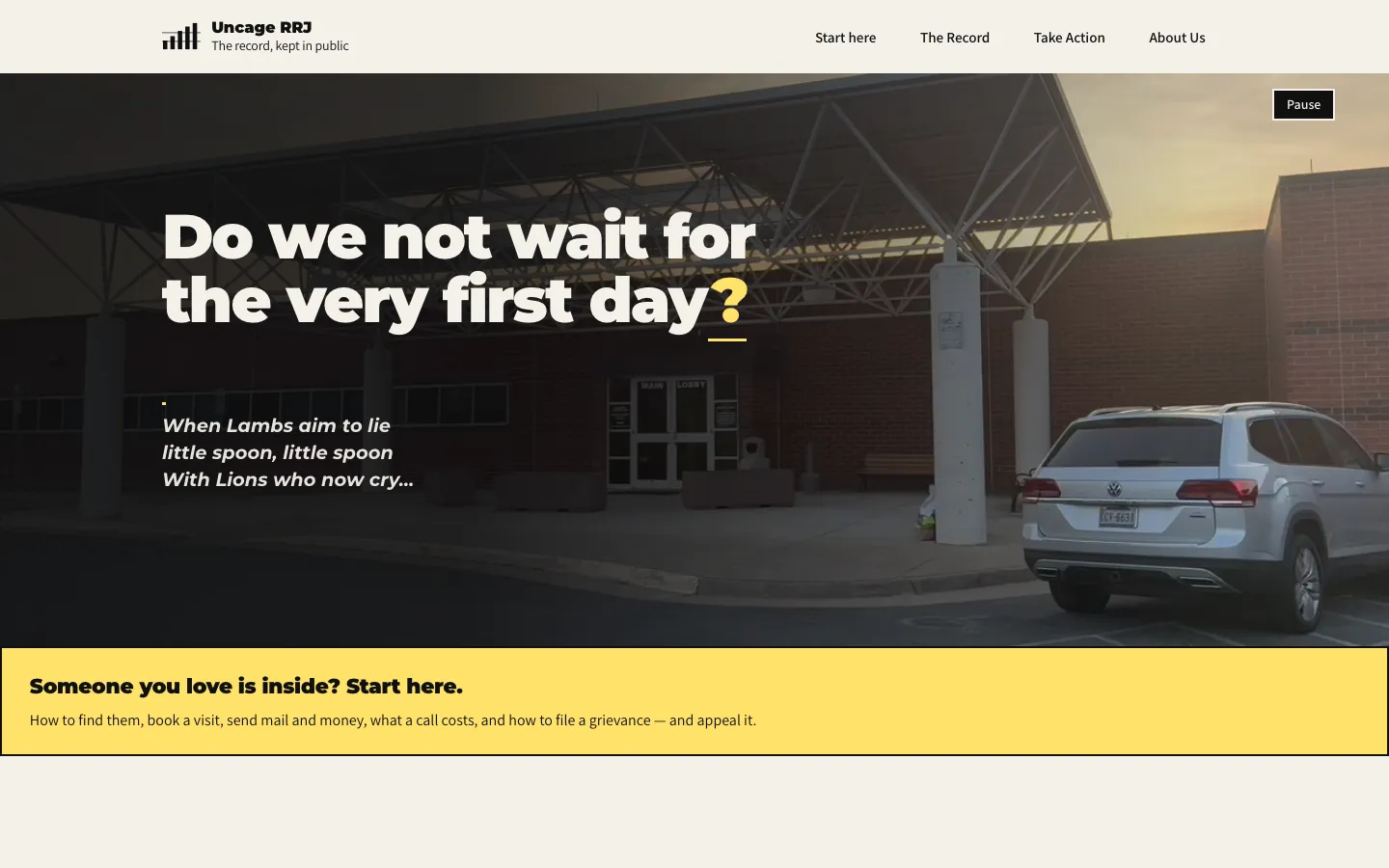
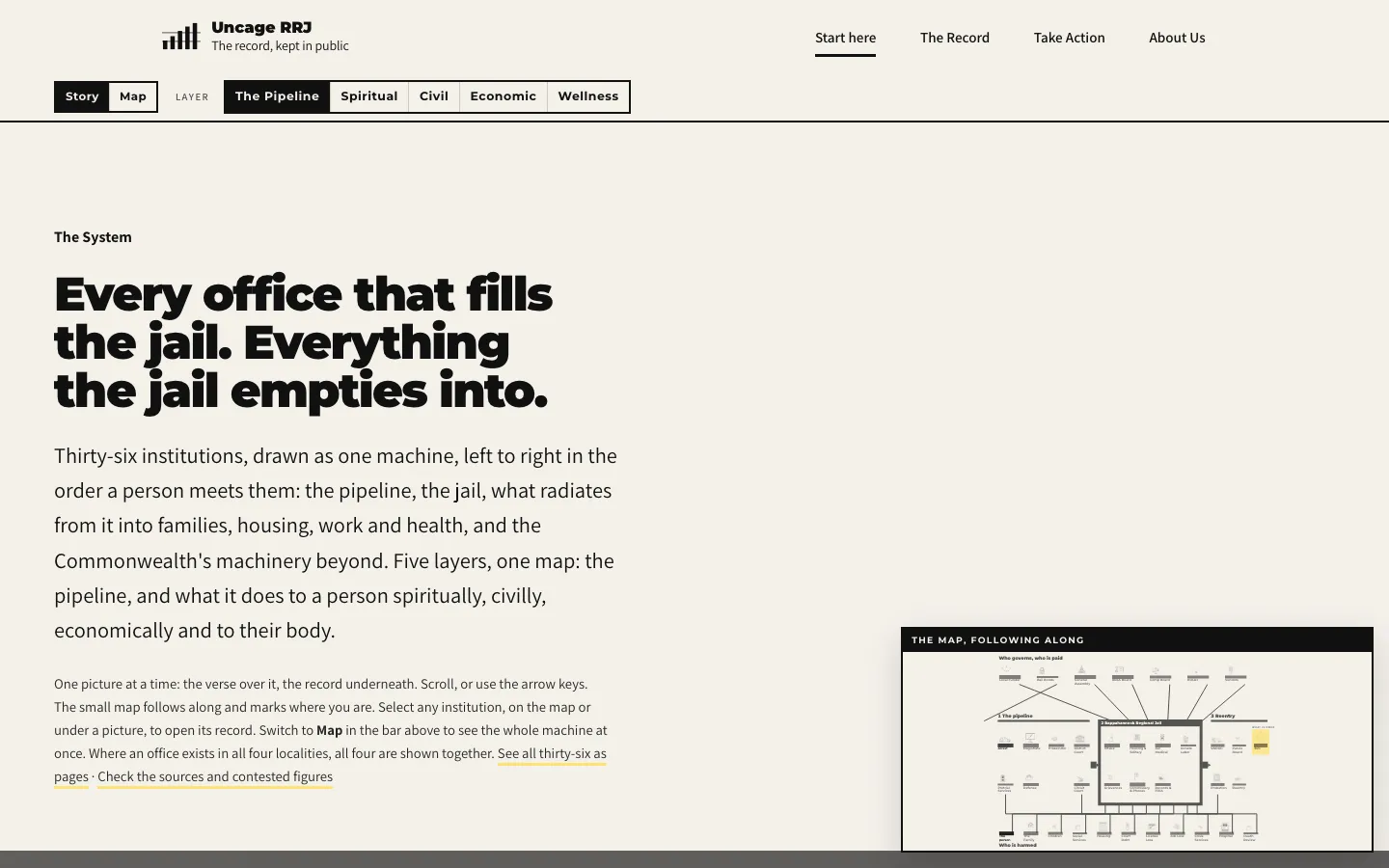
We built the organization’s public site as a program that reads the PDFs into one data file and then prints the whole website from it. Every figure appears with its source document, page reference, retrieval date and a link to the PDF.
Charts are drawn when the site is built, so they load instantly and work without JavaScript. An automatic check refuses to publish the site if a table rounds a number, a link breaks, or stray code leaks into a page.
Around the public site we also built a private triage tool, where AI suggests labels for incoming testimony, and a text-message ride line that connects people leaving the jail with volunteer drivers.
The result in one number
6,443
bookings read out of one PDF
The 2024 booking log became 6,443 bookings and 31,499 charge rows across 69 generated pages, with no person-identifying data published.
Where a person decides
In the testimony triage tool, AI only suggests labels. People make the final call on every one.